Prepare a blog or product photo
Match the image dimensions to the space in your layout before choosing a quality setting. A format change is not a substitute for removing unnecessary pixels.
Set the image dimensionsThis file transfer is unavailable or has expired. Select your file here to continue.
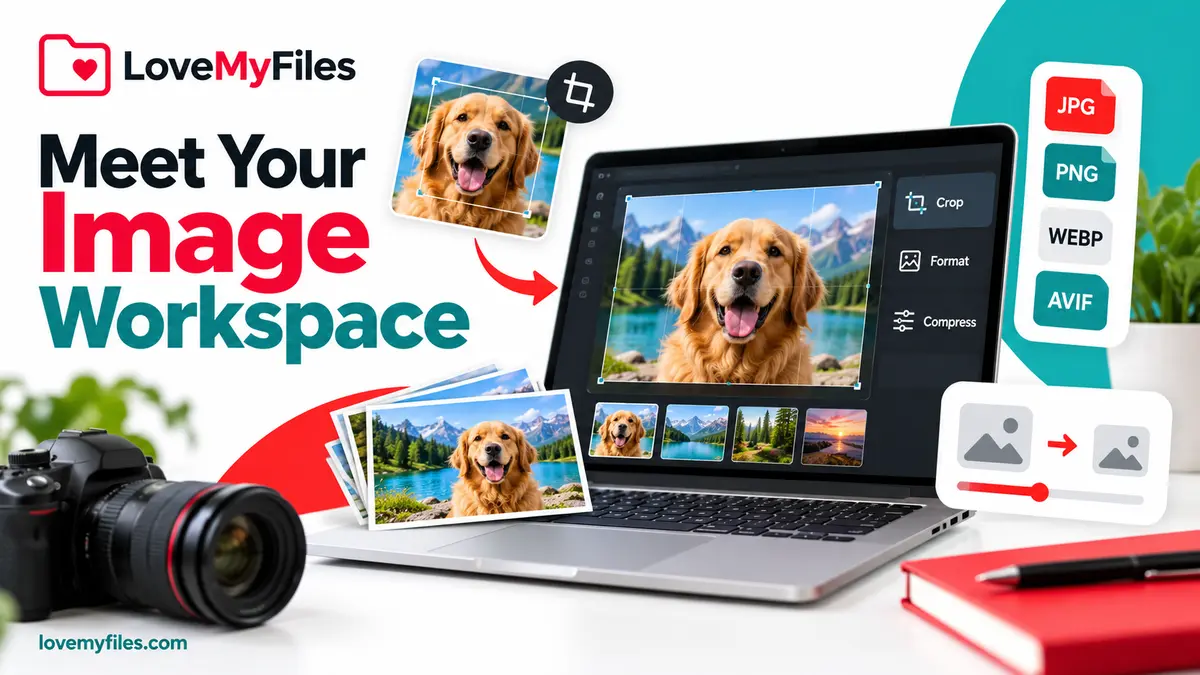
Convert a JPEG photograph to WebP and compare the actual output size. Set quality to balance smaller web images against visible changes.
Common formats stay in your browser. Advanced conversions are deleted from the server immediately.or drop images here
A WebP copy can suit a website image when your publishing system accepts the format. Start with the best JPEG you have, set dimensions for the real display area and compare the output rather than assuming every conversion produces a smaller file.
Select one JPG or JPEG photo. Avoid converting a previously resized or heavily compressed copy when a better source is available.
Use the quality slider to control WebP encoding. Optional resizing is useful when the source is much larger than the image area on your website.
Check the input and output byte sizes and inspect faces, textures and fine edges. Download the WebP only after checking that the receiving system accepts it.
| Property | JPG original | WebP copy |
|---|---|---|
| Compression history | Already contains JPEG compression. | Re-encoding may add new artifacts; it does not restore lost detail. |
| Use in an upload | Accepted by many photo-oriented forms. | Check the destination; not every form accepts WebP. |
| Byte size | Depends on dimensions and earlier encoding. | May be smaller or larger at the chosen quality. |
| Background | An opaque image. | Conversion does not automatically remove its background. |
Match the image dimensions to the space in your layout before choosing a quality setting. A format change is not a substitute for removing unnecessary pixels.
Set the image dimensionsIf your destination accepts the new WebP but requires a specific KB limit, compress that copy with Target size and check the reported result.
Compress WebP to a target sizeA high quality setting or an already optimized JPEG can leave little room for savings. Compare a moderate quality setting and smaller dimensions while checking visible detail.
Check the allowed extensions and MIME types on that site. Keep or optimize your JPEG if the destination does not accept WebP; renaming a WebP to .jpg will not fix it.
JPEG-to-WebP uses your browser when WebP encoding is supported. If it is unavailable, the local server converter is used and its temporary files are removed after processing. The tool accepts one file up to 30 MB and downloads a separate copy; retain the JPEG for editing and destinations that require it.
Read our file privacy policyNo. The source, dimensions and chosen quality affect the result. Compare the reported output size and inspect the saved picture before replacing a JPEG delivery copy.
No. Some forms accept JPEG but reject WebP. Check the destination's allowed formats and keep your JPEG when WebP is not supported.
Re-encoding an already compressed JPEG can introduce more artifacts. WebP is useful for web delivery, but not every upload form accepts it; keep the original for those forms.
Your original file is not modified. Browser conversions do not upload the image. Server conversions use temporary copies that are removed immediately after producing the response, including on a conversion error.