Convert common and advanced image formats
Open everyday files such as JPG, PNG, WebP and GIF, or convert supported camera RAW, HEIC, TIFF, PSD and other specialist formats.
This file transfer is unavailable or has expired. Select your file here to continue.
Convert common and advanced image formats securely.
Common formats stay in your browser. Advanced conversions are deleted from the server immediately.or drop images here
Select, drop or paste supported files.
Adjust the options for the result you need.
Review each result and download it locally.
Open everyday files such as JPG, PNG, WebP and GIF, or convert supported camera RAW, HEIC, TIFF, PSD and other specialist formats.
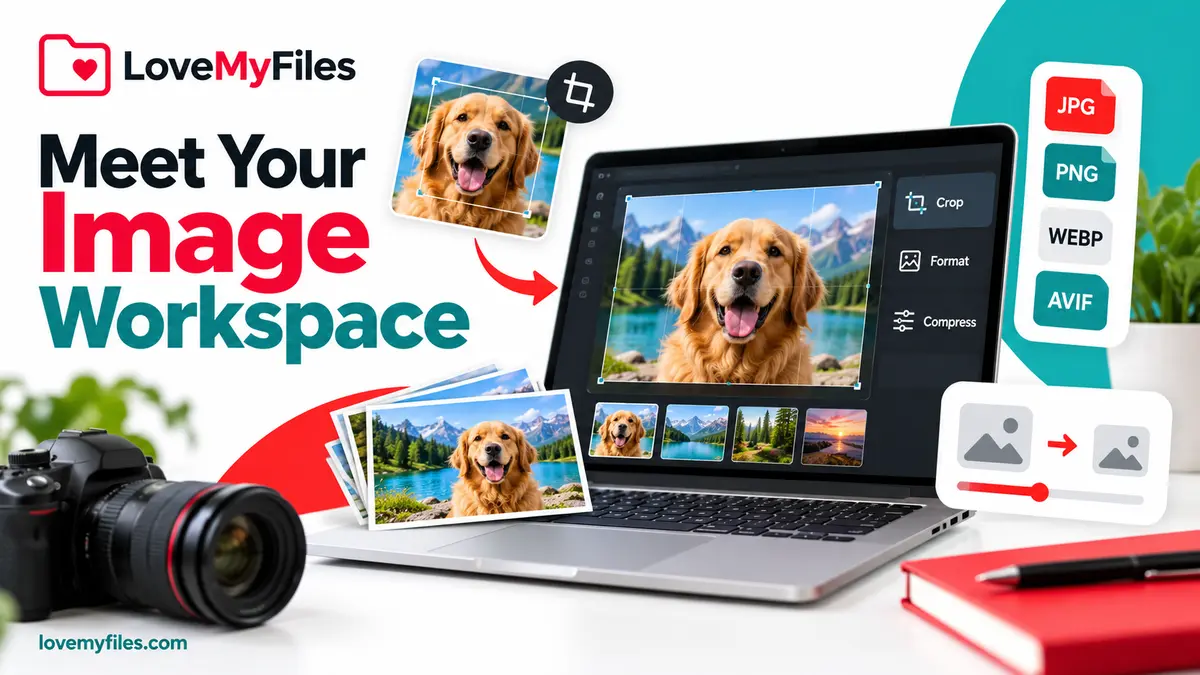
Use JPG for compact photos, PNG for transparency, WebP or AVIF for modern web delivery, and TIFF or PSD when your workflow needs them.
Common conversions can run in your browser. Advanced formats use a temporary private workspace that is deleted immediately after the response is created.
Conversion starts automatically when an accepted image is added, using the currently selected output format.
ANY uses the filename extension to choose the input for conversion routing. Keep the original extension and choose a matching source format; renaming a file does not turn it into that format.
Browser-capable pairs stay on your device. Advanced formats and unavailable browser encoders send the image to the server, where installed format support determines whether the conversion succeeds.
The output format and conversion route affect more than the filename.
JPEG cannot keep transparency. Browser conversions fill transparent pixels with the selected background color, including when PNG or WebP is chosen. Inspect the downloaded image before reusing a cutout.
Converting a compressed JPEG to PNG cannot restore lost detail and may increase file size. Quality and resize controls apply to browser conversions; server requests send only the input and output format choices.
Keep the original for animation, additional pages or later editing.
Server conversion reads the first frame or page only, including GIF and multipage TIFF. The browser also creates a single bitmap; the converted downloads do not preserve animated playback.
Both conversion paths strip metadata. Inspect orientation, colors and dimensions in the downloaded file, then use Resize Image if you need another size after a server conversion.
Resize the converted imageTransparent pixels are filled with the background color selected in the conversion settings.
Common conversions run privately in your browser. Advanced formats use an isolated server process with a 25-second limit; temporary input and output files are deleted before the response is returned.
Common images, camera RAW, HEIC, PSD, EPS, XCF and more
JPEG, PNG, WebP, AVIF, TIFF, GIF, BMP, PSD, EPS and more
Quality, background color and optional resizing
Common conversions run privately in your browser. Advanced formats use an isolated server process with a 25-second limit; temporary input and output files are deleted before the response is returned.